
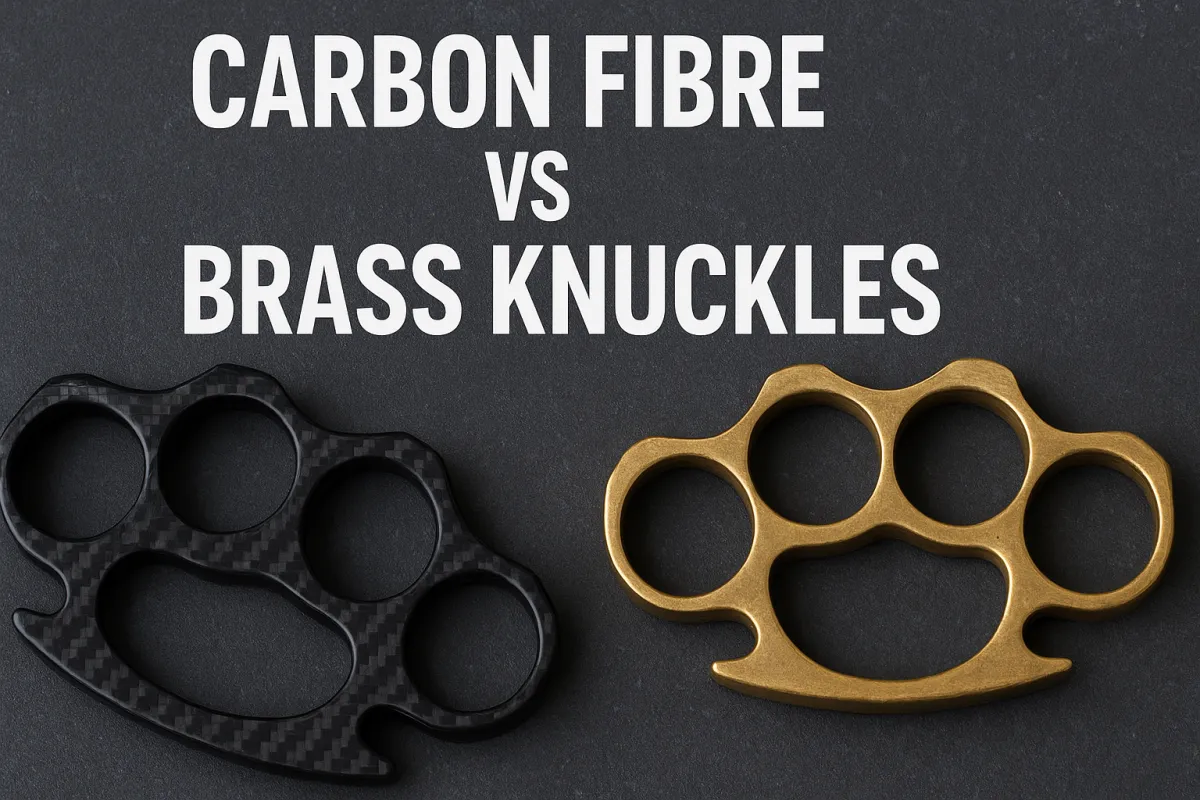
Carbon Fibre vs Traditional Brass Knuckles
This blog compares carbon fibre and traditional brass knuckles based on their material strength, weight, handling, design, and legal status. Carbon fibre knuckles are lightweight, corrosion-resistant, and comfortable, while brass and steel knuckles deliver more impact but come with greater risk—both in safety and legality. Ultimately, your choice depends on your priorities: performance, concealability, or compliance with the law.
Carbon Fibre vs Traditional Brass Knuckles
When it comes to self-defence tools or collectible gear, few items spark as much debate as carbon fibre versus traditional brass knuckles. One represents modern engineering—a composite born in aerospace and racing tech—while the other carries old-school street mystique and raw impact power. But beyond appearances, their differences in strength, handling, and legality are what truly set them apart.
Material and Durability
Carbon fibre’s biggest strength lies in its exceptional strength-to-weight ratio. Studies and independent tests show that it can outperform steel in certain applications while resisting corrosion and cracking over time. Brass knuckles, traditionally made from brass or steel, are heavier and denser, designed to channel maximum force through each strike. The metal variants feel solid in hand and can deliver tremendous impact—but that same density can backfire, increasing risk of injury to the user’s knuckles and joints.
Weight and Handling
A key difference is how each material behaves in use. Carbon fibre knuckles typically weigh around 3–3.5 ounces, while steel or brass versions can tip the scale near 9.7 ounces. The lighter frame of carbon fibre means quicker movement, less fatigue, and easier concealment. By contrast, heavier metal knuckles hit harder due to momentum but are slower to recover between strikes. It’s a trade-off between speed and force—efficiency versus brute strength.
Design and Comfort
Carbon fibre knuckles are often precision-cut with ergonomic edges and finger holes that suit various hand sizes, reducing self-injury and improving grip comfort. Brass versions stick to traditional layouts: simple, functional, and brutally effective. But their rigidity and sharp edges can make extended use uncomfortable. For those prioritizing control and everyday carry convenience, carbon fibre often wins on design refinement alone.
Legal Considerations
Perhaps the biggest deciding factor isn’t physical—it’s legal. In many countries, including Canada, metal knuckles made from brass or steel are prohibited weapons under law. Non-metal options like carbon fibre or high-strength plastic may avoid specific “metal weapon” classifications, but that doesn’t always make them legal to carry or use. Regulations differ widely, and even possession can result in fines or criminal charges. Always verify local laws before purchasing or carrying any type of knuckle duster.
Practical Takeaway
Carbon fibre knuckles appeal to those seeking lightness, corrosion resistance, and potential legal flexibility. Brass and steel options remain unmatched for impact power but demand greater responsibility and awareness of risk—both physical and legal. Whether for self-defence, collection, or curiosity, the smartest move is to prioritize safety and legality before material or design.
References
https://www.reddit.com/r/weapons/comments/1ct2ymt/whats_better_for_a_knuckle_duster_steel_or_carbon/
https://monkeyknuckles.ca/blogs/news/are-brass-knuckles-legal-in-canada
https://www.combatpit.com/blog/knuckle-dusters-vs-brass-knuckles
https://www.avvo.com/legal-answers/carbon-is-a-non-metal-would-brass-knuckles-made-of-36828.html
https://www.reddit.com/r/materials/comments/11ymqos/assuming_rarity_and_cost_werent_an_issue_what/