
History of Brass Knuckles
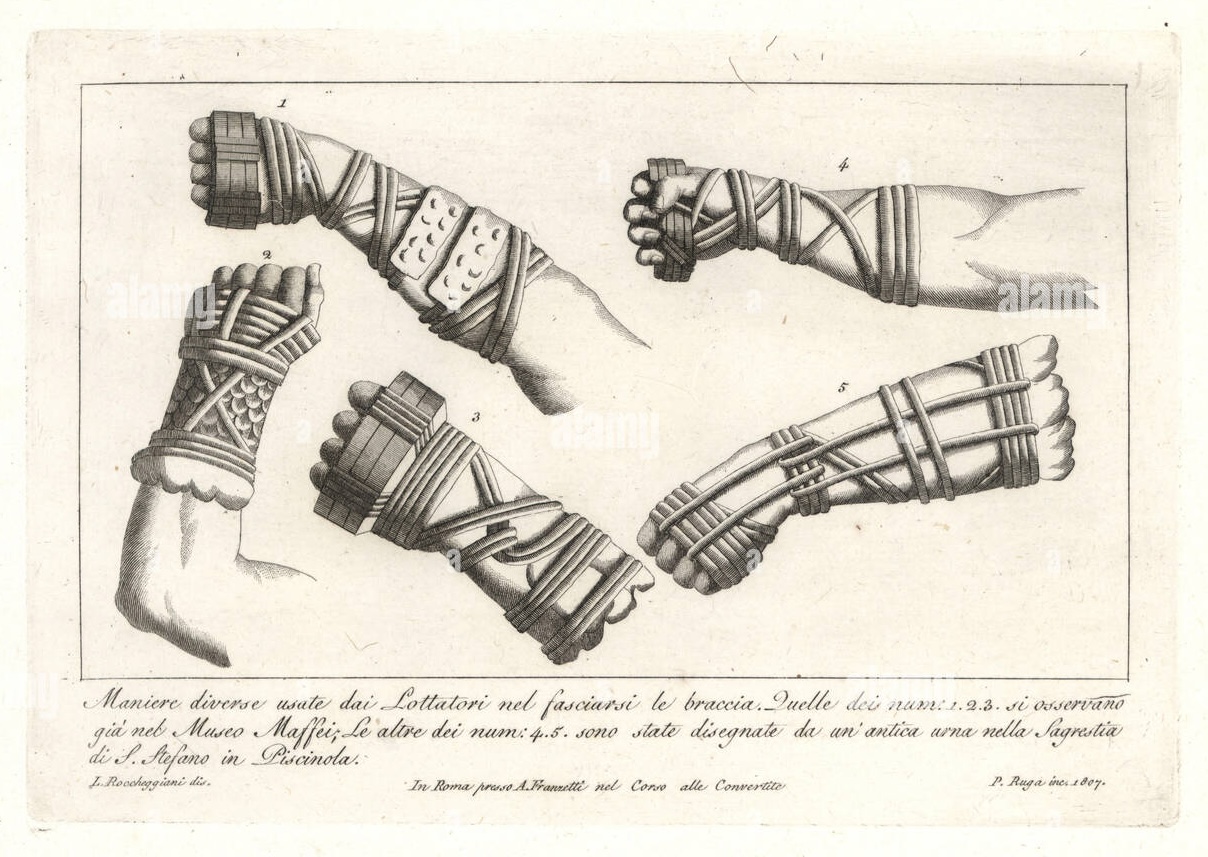
The history of brass knuckles goes back much further than the modern metal knuckle-duster. One of the earliest known predecessors was the Caestus, a reinforced fighting glove used in ancient Greece and Rome. Similar fist-enhancing weapons appeared in other cultures, but there is no clear evidence that they all descended from one design.
The modern form became more recognizable during the nineteenth century, particularly in the United States. Brass knuckles appeared during the Civil War era and later became associated with street fighting and concealed weapons. During World War I, the idea was incorporated into military trench knives, including the U.S. Model 1917. By World War II, knuckle weapons were still present in some military units, while governments increasingly introduced laws restricting them.
In other words, brass knuckles were not invented at one exact moment. They developed from a much older idea: reinforcing the human fist for close combat.
Ancient Origins: The Caestus
The story begins in the ancient Mediterranean with the Caestus, a reinforced fighting glove used by Greek and Roman fighters.
The caestus was made from leather and could be strengthened with heavy materials such as lead, metal studs, or stones. The Smithsonian American Art Museum describes it as the ancient world's equivalent of brass knuckles.Smithsonian American Art Museum
It was not identical to a modern knuckle-duster. The caestus was more like a reinforced glove, while modern brass knuckles are usually rigid metal frames.
But the basic idea was the same: strengthen the hand and increase the impact of a punch.
The Nineteenth Century: The Modern Form Appears
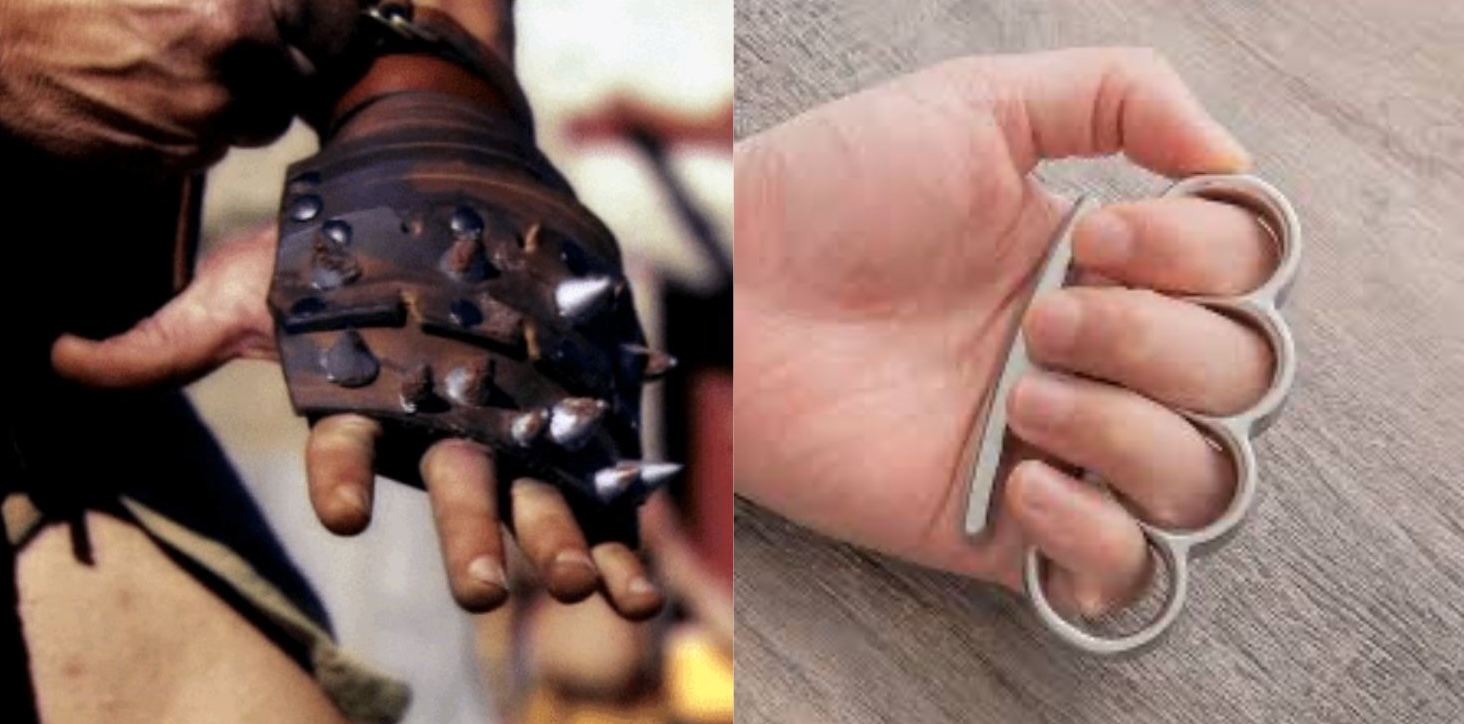
The modern brass knuckle became much easier to recognize during the nineteenth century.
Metal versions appeared in the United States in different shapes and materials. Some were manufactured, while others were made or adapted locally.
The term “brass knuckles” also became established during this period. Historical evidence shows that metallic knuckles were already being discussed in American laws during the nineteenth century.
Brass became a popular material because it was durable and relatively easy to cast. However, the name eventually became a general term even when made from other metals.
Brass Knuckles During the Civil War
The American Civil War helped bring small close-combat weapons into wider use.
Soldiers and civilians could make or obtain compact weapons that did not require ammunition. Examples varied from simple metal knuckle guards to more unusual combination weapons.
The period is particularly interesting because it shows how these objects could be both manufactured products and improvised weapons.
Brass knuckles associated with Abraham Lincoln's bodyguards have also become part of the historical record, although they represent only one small part of a much larger story.

World War I: Brass Knuckles Become a Trench Weapon
World War I gave knuckle-style weapons a new military role.
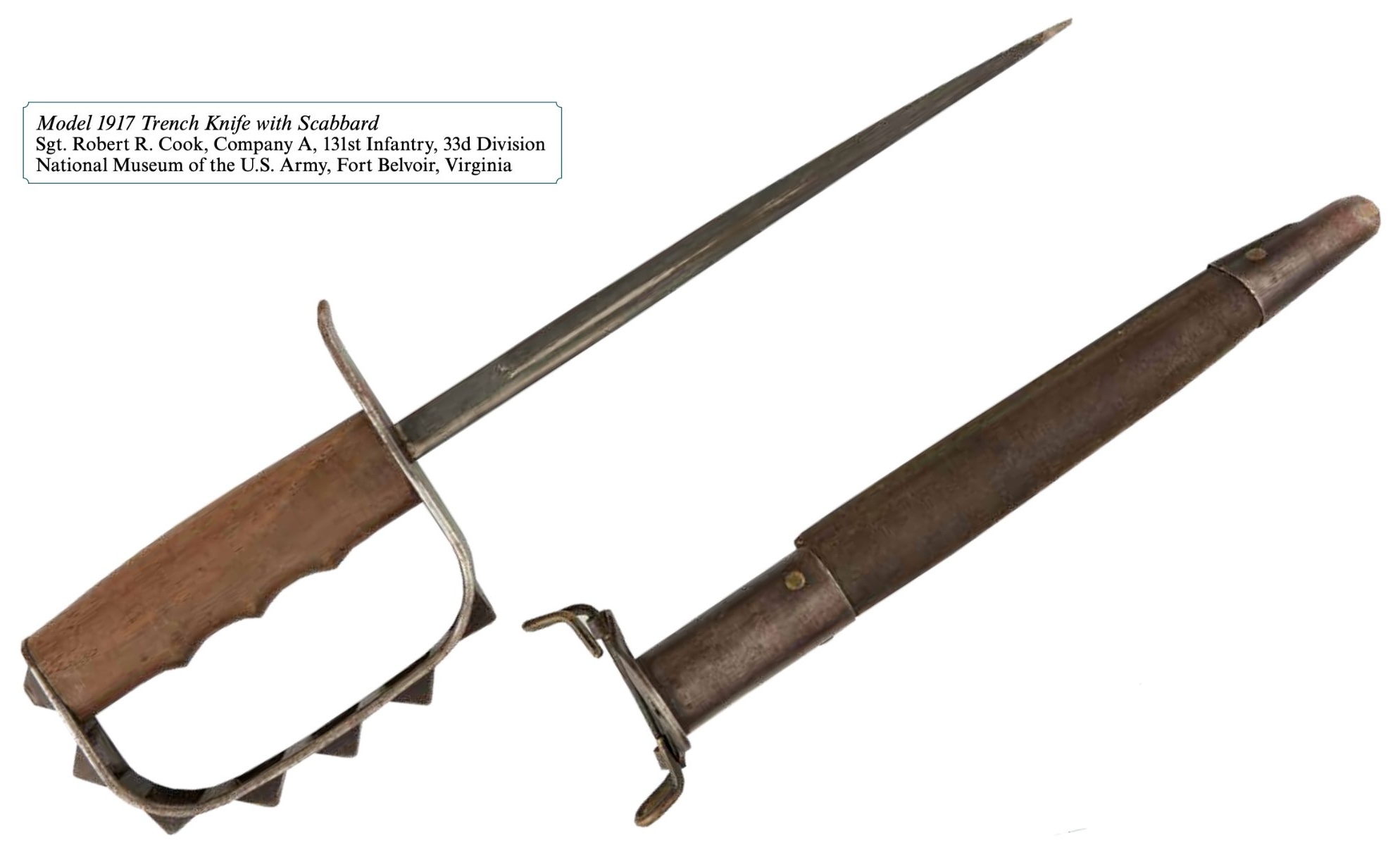
Trench warfare created a demand for compact weapons suitable for extremely close combat. The U.S. Army's Model 1917 trench knife combined a blade with a spiked hand guard that could also function as brass knuckles. The U.S. Army's own historical material describes the guard as capable of serving as brass knuckles in a fistfight.U.S. Army Center of Military History
This was an important development because the knuckle weapon was no longer simply a standalone object. It had become part of a multi-purpose military fighting knife.
World War II: The Design Survives
Knuckle weapons did not disappear after World War I.
The Canadian War Museum has a1941 brass knuckles artifact made from cast iron and associated with the British Army's Commando service.Canadian War Museum
However, brass knuckles were no longer the center of military weapon design. Firearms, grenades, bayonets, and standardized fighting knives were far more important.
The 1941 artifact is therefore best viewed as evidence that the designcontinued to exist in military circles, rather than proof that it was a standard weapon for all soldiers.
From Military Weapon to Criminal Symbol
After the world wars, brass knuckles increasingly became associated with crime, street fighting, and concealed weapons.
Films, comics, and crime fiction helped turn the object into a familiar symbol of gangsters and enforcers.
That image is powerful—but it is only one part of the history.
The real story stretches from ancient combat sports to nineteenth-century America and twentieth-century military equipment.
The Legal History of Brass Knuckles
Restrictions on metallic knuckles appeared surprisingly early.
Nineteenth-century American laws increasingly targeted concealed weapons, including brass, iron, and metallic knuckles. For example, North Carolina's 1879 law specifically prohibited carrying brass, iron, or metallic knuckles concealed.Duke Center for Firearms Law
Duke Law's research identifies numerous nineteenth-century restrictions on metallic knuckles and shows that concerns about these weapons are not a modern development.Duke Center for Firearms Law
Today, the legal status of brass knuckles varies by jurisdiction, so current laws should always be checked locally rather than relying on an old state-by-state list.
Why Brass Knuckles Still Matter
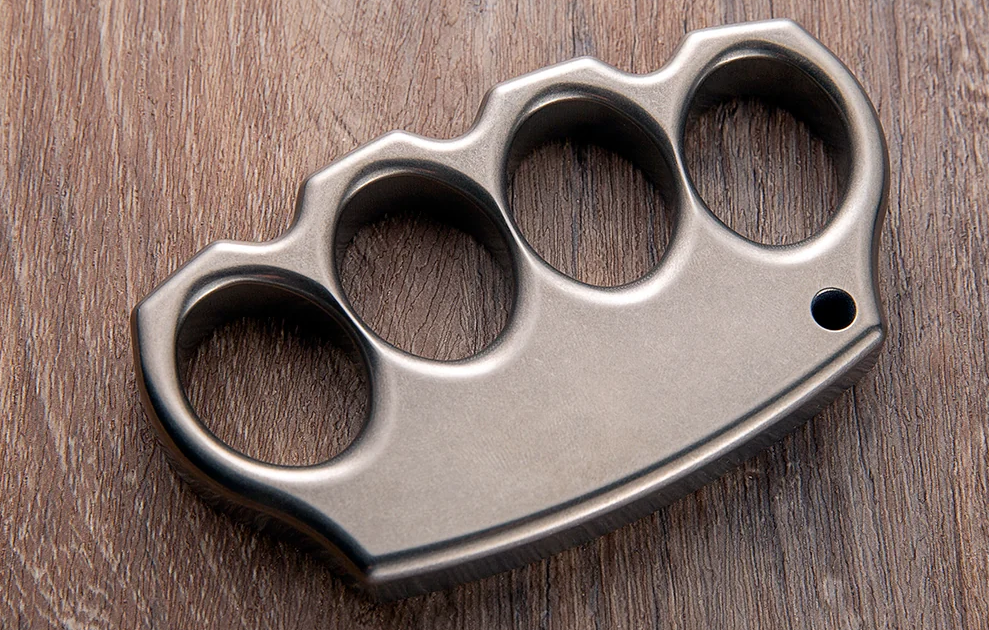
The history of brass knuckles is really the history of one simple idea.
Ancient fighters reinforced the hand with leather and heavy materials. Nineteenth-century makers turned that idea into compact metal weapons. World War I military designers incorporated knuckle guards into trench knives. Later, the weapon became strongly associated with crime, popular culture, and weapons regulation.
There was never one single inventor or one moment when brass knuckles suddenly appeared.
Instead, the design evolved over centuries as different societies found