
Monkey Fist as a Self-Defence Tool: Does It Actually Work?
Can a monkey fist really protect you in a dangerous situation? It may look like a small, practical personal-protection accessory, but there is more to consider than its size. From its maritime history to its potential risks and legal status in Canada, here's what you should know before considering it a self-defence tool.
Quick Summary: A monkey fist is a traditional nautical knot originally designed to help sailors throw ropes between ships and shore. Modern versions sometimes contain a heavy core, turning the knot into an improvised impact object.
While a weighted monkey fist can cause injury, that doesn't make it a reliable self-defence tool. It has several limitations, including close-range vulnerability, difficulty controlling it under stress and the possibility of causing serious injuries.
In Canada, carrying one is not automatically illegal simply because it resembles a weapon. However, its intended purpose, how it is carried and how it is used can have legal consequences under the Criminal Code.
The bottom line: A monkey fist is not a recommended everyday self-defence option. Awareness, avoiding confrontation, creating distance and getting to safety are much better priorities.
What Is a Monkey Fist?
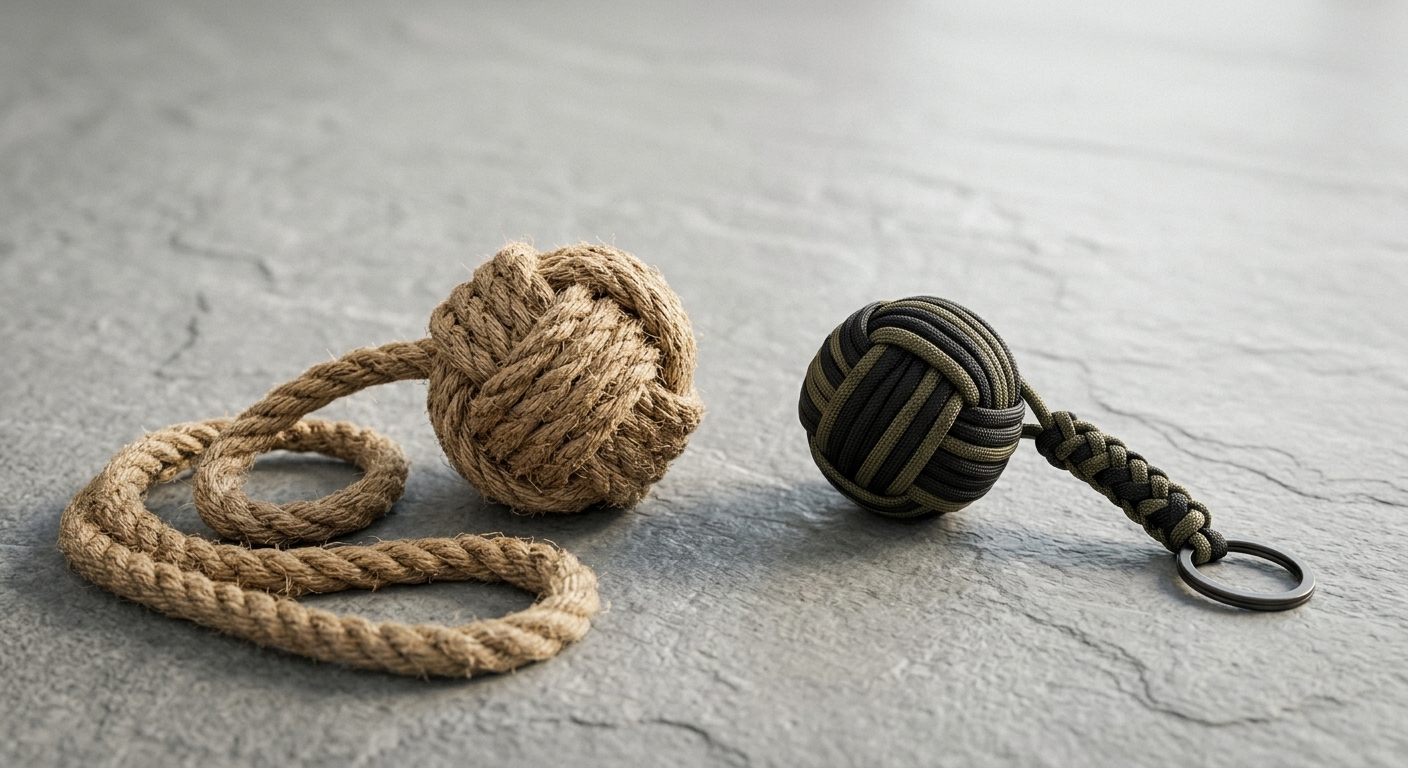
A monkey fist is a round knot made from rope or cord. It has been around for generations and has an interesting connection to maritime history. Originally, sailors used the knot at the end of a heaving line. Its purpose was simple: adding weight made it easier to throw a rope from one vessel to another or from a ship to shore. The knot could contain a small core, traditionally made from materials such as rope, stone or metal. Over time, the monkey fist became popular in decorative ropework, keychains and outdoor accessories.
Traditional Monkey Fist vs Modern Versions
There is an important difference between a traditional monkey fist and some modern versions marketed for personal protection. A traditional monkey fist is simply a nautical rope knot. Modern weighted versions may contain a dense internal object, making them considerably more dangerous if misused. The knot itself isn't inherently a weapon. The material inside, its intended purpose and how someone uses it make a significant difference.
Can a Monkey Fist Actually Be Used for Self-Defence?
The short answer is yes, a weighted monkey fist can function as an improvised impact weapon. However, there is a big difference between an object that can cause injury and a tool that provides reliable personal protection. A weighted object concentrates force into a smaller area. This can result in injuries ranging from bruising to serious physical harm. But does that make it a good choice for everyday self-defence? Not necessarily.
The Practical Limitations
There are several reasons why relying on a monkey fist for personal protection is questionable.
Close-range vulnerability: Physical confrontations can become unpredictable very quickly. Being close to another person increases the risk of losing control of the situation.
Difficulty controlling it: Handling an unfamiliar object under stress can be difficult and unpredictable.
Risk of injury: What someone intends as a warning or deterrent can cause much more serious harm than expected.
Limited protection: It does not solve problems involving multiple people, weapons or other dangerous circumstances.
Most importantly, carrying something that can cause injury doesn't guarantee that you will be safer. Self-defence should be about protecting yourself and getting away from danger, not winning a physical confrontation.
The Risks of Carrying a Monkey Fist
The biggest concern with a weighted monkey fist is that people may underestimate its potential consequences. Because it is relatively small, it can look harmless. However, a dense object inside a rope knot can cause significant injuries. There is also the risk of escalating a confrontation. An object intended for protection can quickly become part of an assault allegation if it is used unnecessarily or with excessive force. A person may also face serious consequences if someone suffers a permanent injury. This is why the decision to carry an object for personal protection should never be based only on its size, appearance or perceived effectiveness.
Is Carrying a Monkey Fist Legal in Canada?
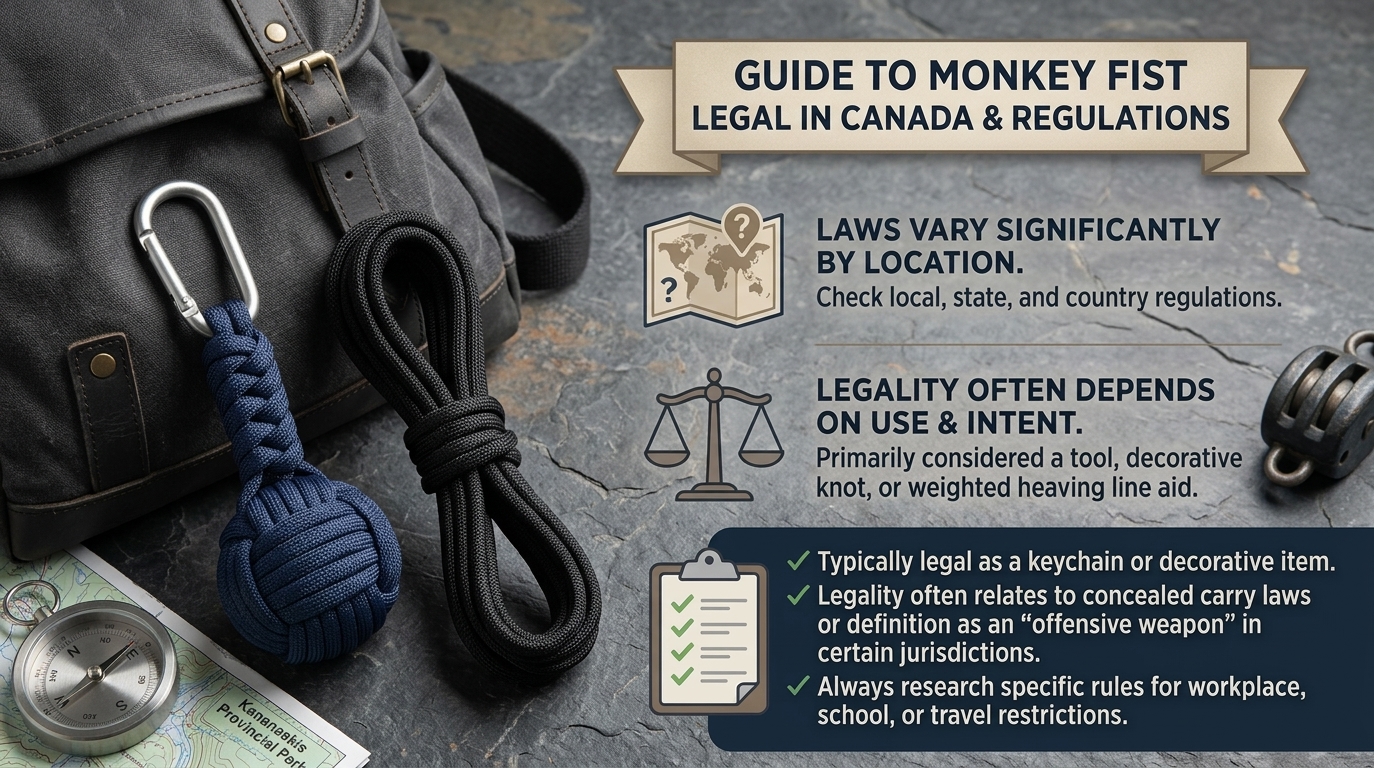
This is one of the most important questions, especially for people considering carrying one in Canada. Unlike some countries, Canada does not have a simple rule that specifically names every possible improvised impact object. Instead, the Criminal Code looks at what an object is, how it is intended to be used and the circumstances surrounding its possession or use.
What Does Canadian Law Say?
Under Section 2 of the Canadian Criminal Code, a weapon includes anything used, designed to be used or intended to be used to cause injury or to threaten or intimidate another person. This means an ordinary-looking object can potentially be considered a weapon depending on its intended purpose or use.
There are two other important sections to understand.
Section 88 – Possession of a Weapon for a Dangerous Purpose
Section 88 makes it an offence to carry or possess a weapon for a purpose dangerous to the public peace or for committing an offence. In simple terms, carrying an object with the intention of using it to threaten or harm someone can create serious legal problems.
Read Section 88 of the Canadian Criminal Code.
Section 90 – Carrying a Concealed Weapon
Section 90 addresses carrying a weapon concealed, subject to the statutory exception. If an object is considered a weapon under Canadian law, concealing it can create additional legal consequences.
Read Section 90 of the Canadian Criminal Code.
What About Alberta?
The same federal Criminal Code provisions apply in Alberta, including Edmonton, Calgary and other Alberta communities. There is no blanket rule that makes every rope monkey fist illegal simply because of its appearance. Equally, calling something a keychain or personal accessory does not automatically make it legal to carry for defensive purposes. The circumstances matter. If you are considering carrying a weighted monkey fist in Alberta, get advice from a qualified Canadian lawyer before making that decision.
Important: This is general legal information, not legal advice. The exact classification of an object depends on the facts and circumstances.
Can You Legally Defend Yourself in Canada?
Yes. Canadian law recognizes the right to defend yourself or another person when necessary. However, that right comes with important limits. Section 34 of the Criminal Code deals with the defence of a person.
It generally requires three things:
You reasonably believe that force is being used or threatened against you or another person.
Your actions are intended to protect yourself or that other person.
Your response is reasonable in the circumstances.
Courts consider several factors, including:
How serious the threat was.
Whether the threat was immediate.
Whether other options were available.
Whether a weapon was involved.
The nature and proportionality of the response.
This means self-defence is not a free pass to use any level of force simply because you feel threatened. For example, continuing to use force after the immediate danger has passed can create serious legal consequences. The important principle is that defensive actions must be reasonable in the circumstances.
Read Section 34 of the Canadian Criminal Code.
What Does Responsible Self-Defence Actually Look Like?
Good personal safety starts long before a physical confrontation happens. Instead of relying on an object to protect you, focus on habits that reduce your chances of getting caught in a dangerous situation.
Awareness and Avoidance
Pay attention to your surroundings, especially when walking alone or visiting unfamiliar places. Avoid unnecessary confrontations. If a situation feels uncomfortable, leave rather than trying to prove a point.
Create Distance and Find Safety
If someone becomes aggressive, focus on getting away. Move towards a public area, enter a nearby business or seek help from security staff. Creating distance can give you more opportunities to leave safely.
Use Barriers When Necessary
Everyday objects such as a bag, jacket or closed door can help create separation between you and another person. The priority should be creating an opportunity to escape rather than turning everyday objects into weapons.
Know When to Get Help
If you are in immediate danger, contact emergency services when it is safe to do so. If a physical confrontation occurs, disengage as soon as possible. Seek medical attention if anyone is injured and provide an accurate account of what happened.
What Do Maritime Safety Experts Say About Weighted Monkey Fists?
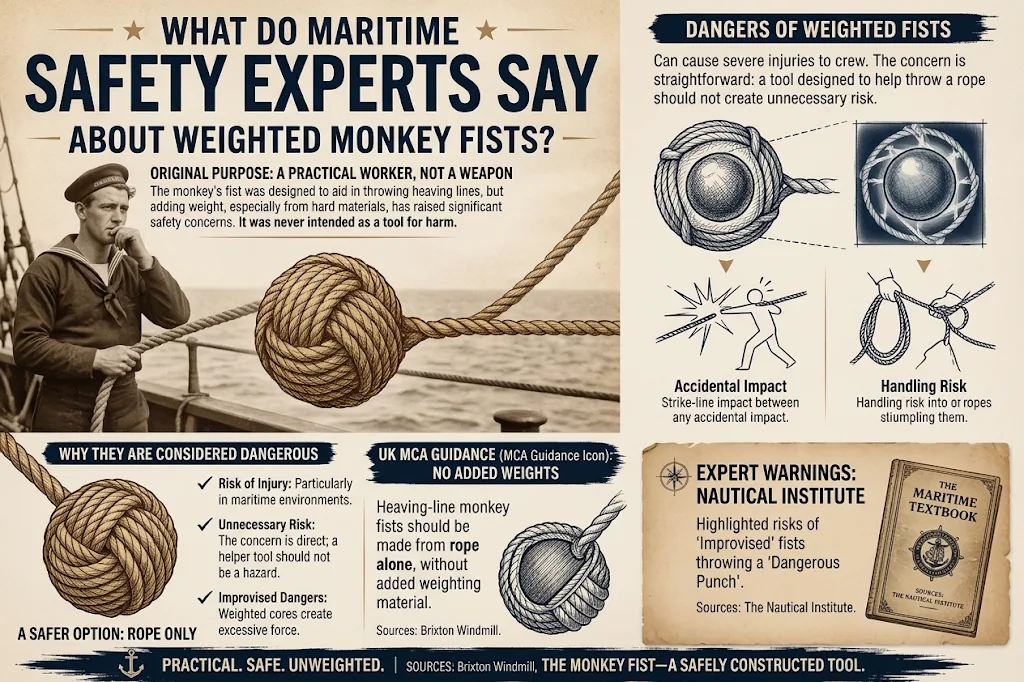
Interestingly, the monkey fist was never designed to be a weapon. Its original purpose was to help sailors throw heaving lines between ships and shore. However, adding weight to the knot has raised safety concerns, particularly when that weight is made from hard materials.
Why Are Weighted Monkey Fists Considered Dangerous?
A weighted monkey fist can cause injuries if it accidentally strikes someone. This is particularly concerning in maritime environments, where sailors regularly handle ropes and heaving lines around other crew members. The UK Maritime and Coastguard Agency has issued guidance that heaving-line monkey fists should be made from rope alone, without added weighting material. The concern is straightforward: a tool designed to help throw a rope should not create an unnecessary risk of injury to the people handling it. The Nautical Institute has also highlighted the dangers associated with improvised weighted monkey fists in its article, Improvised Monkey's Fists Throw a Dangerous Punch. These warnings highlight an important point: even in its original maritime setting, adding weight to a monkey fist can create unnecessary safety risks.
Sources:
Final Verdict: Is a Monkey Fist Worth Carrying for Self-Defence?
A monkey fist has an interesting history, and its modern versions have attracted attention as compact personal-protection accessories. But when you look beyond its appearance, the drawbacks are difficult to ignore. A weighted monkey fist can cause serious injury, is difficult to control in unpredictable situations and may create legal problems depending on the circumstances in which it is carried or used. It also doesn't address the most important part of personal safety: getting away from danger.
So, is a monkey fist a good self-defence tool?
Our answer is no. It is better understood as an improvised impact object than a reliable everyday self-defence solution. Being prepared doesn't mean carrying something that can hurt another person. It means recognizing danger, making smart decisions, avoiding unnecessary confrontation and knowing how to get yourself to safety. At the end of the day, the best outcome in any dangerous situation isn't winning a fight. It's getting home safely.